Beat TSA Lines: 2026 Carry-On Rules & Digital ID Fast-Track
Travelers in 2026 can significantly reduce airport wait times by understanding updated TSA carry-on rules and utilizing digital ID fast-track procedures, ensuring a more efficient and less stressful security checkpoint experience.
Are you tired of the seemingly endless queues at airport security? Learning how to beat 45-minute TSA checkpoint lines: updated carry-on rules and digital ID fast-track procedures for 2026 travelers is no longer a luxury, but a necessity for a stress-free journey. This guide will equip you with the knowledge to breeze through security, making your travel experience smoother than ever before.
The evolving landscape of TSA security in 2026
The year 2026 marks a significant evolution in airport security, driven by technological advancements and a global commitment to efficiency. The days of unpredictable wait times are slowly becoming a relic of the past, thanks to a concerted effort by the Transportation Security Administration (TSA) to streamline processes without compromising safety. This shift is not merely about speed; it's about creating a more predictable and less anxiety-inducing experience for every traveler. Understanding these foundational changes is the first step toward mastering the art of the fast-track.
The emphasis is now on smart security, integrating data and advanced screening technologies to identify potential threats more precisely and quickly. This means less manual inspection for compliant travelers and a greater focus on anomaly detection. The traveler's role in this ecosystem has also evolved, requiring a proactive approach to understanding and adhering to the latest guidelines. From how you pack your bags to how you present your identification, every detail contributes to the overall flow of the checkpoint. The goal is to transform the security line from a bottleneck into a seamless transition, allowing passengers to move from curb to gate with unprecedented ease.
Key technological upgrades at checkpoints
- Advanced imaging technology: New scanners offer clearer, more detailed images, reducing the need for pat-downs.
- Computed tomography (CT) scanners: These provide 3D views of carry-on contents, minimizing bag searches for compliant items.
- Automated screening lanes: Self-service stations for bins and bags increase throughput and reduce human error.
The integration of these technologies is not uniform across all airports yet, but the trend is clear: a future where technology handles the heavy lifting, allowing TSA officers to focus on critical decision-making. Travelers should check their specific airport's website for the most current information on available technologies. Ultimately, navigating the 2026 security landscape means embracing these changes and preparing accordingly. It's about being informed and proactive, transforming potential delays into swift advancements towards your destination.
Updated carry-on rules for a swift passage
The foundation of a quick security experience begins with your carry-on bag. For 2026, the TSA has refined its carry-on rules, focusing on clarity and efficiency. These updates are designed to minimize the need for manual bag checks, which are often the primary cause of delays. Knowing exactly what you can and cannot bring, and how to pack it, is paramount. The general principle remains consistent: transparency and accessibility of items are key. Liquids, gels, and aerosols must still adhere to the 3-1-1 rule, but the scrutiny of electronics has evolved significantly.
New guidelines encourage travelers to keep certain electronics, like laptops and tablets, within their bags if they are placed in a designated clear, separate sleeve or compartment, allowing for easier scanning. This reduces the time spent removing and replacing items from your bag. Additionally, the definition of what constitutes a 'personal item' versus a 'carry-on' has been clarified by many airlines in conjunction with TSA, impacting how much you can bring onboard without incurring extra fees or delays at the gate. Always verify these specifics with your airline before departure.
Electronics and liquids: what's new?
- No removal for most electronics: With CT scanners, laptops and tablets can often stay in bags, provided they are easily scannable.
- Enhanced liquid screening: Advanced scanners can differentiate between harmless and prohibited liquids, though the 3-1-1 rule still applies for now.
- Power bank regulations: Clearer guidelines on lithium-ion battery sizes and storage for power banks in carry-ons.
The goal of these carry-on updates is to empower travelers with the knowledge to pack intelligently, reducing friction at the checkpoint. By adhering to these refined rules, you are not only helping yourself but also contributing to the overall efficiency of the security process for everyone. A well-packed bag is a fast-tracked bag, and in 2026, this principle is more relevant than ever. Being prepared means less stress and more time to enjoy your travel experience.
Digital ID fast-track: your express pass to efficiency
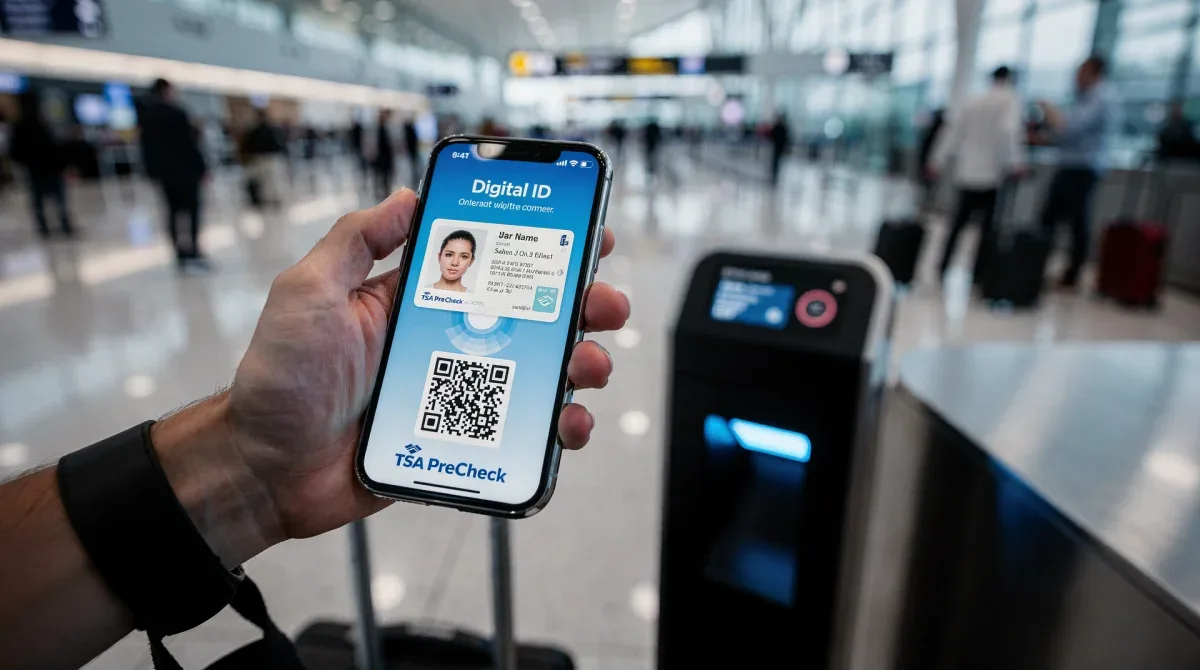
The most transformative change for 2026 travelers looking to beat long lines is the widespread adoption of digital ID fast-track procedures. This innovation leverages secure, verifiable digital identification on your smartphone, eliminating the need to present physical documents. Imagine walking up to a checkpoint, scanning your phone, and being cleared in seconds. This isn't futuristic; it's the present reality at an increasing number of airports. The digital ID system integrates seamlessly with existing trusted traveler programs like TSA PreCheck and CLEAR, amplifying their benefits.

The process typically involves enrolling your driver's license or state ID into a secure digital wallet application, often provided by your state's DMV or a trusted third-party vendor. This digital credential is then encrypted and presented to a dedicated scanner at the TSA checkpoint. The verification is almost instantaneous, reducing the manual inspection of physical documents and the potential for human error. It's a significant leap forward in both convenience and security, offering a robust layer of protection against identity theft while accelerating the checkpoint experience.
How to set up your digital ID for travel
Setting up your digital ID is a straightforward process, though it requires a bit of foresight before your travel day. Most states participating in the digital ID program offer clear instructions on their Department of Motor Vehicles (DMV) websites. Typically, you'll download a secure digital ID app, verify your identity, and link your physical driver's license or state ID. Ensure your device is fully charged, as a dead battery could halt your progress. It's also wise to have your physical ID as a backup, especially during the initial rollout phase of this technology.
- Download official state app: Ensure it's from a trusted source, usually your state's DMV.
- Verify identity securely: Follow the in-app instructions, often requiring a photo scan of your physical ID.
- Link to trusted traveler programs: Integrate with TSA PreCheck or CLEAR for maximum benefit.
The digital ID fast-track is poised to become the standard for efficient air travel. By embracing this technology, travelers can significantly reduce their time spent in security lines, dedicating more moments to relaxation or preparation before their flight. This transition represents a modernization of travel, prioritizing both security and passenger convenience, and understanding it is crucial for any 2026 traveler.
Maximizing trusted traveler programs: PreCheck and CLEAR in 2026
While digital IDs are revolutionizing the checkpoint experience, existing trusted traveler programs like TSA PreCheck and CLEAR remain indispensable for truly bypassing those dreaded 45-minute lines. In 2026, these programs are more integrated and valuable than ever, offering layers of expedited screening that complement the digital ID initiative. Think of them as your VIP pass to the airport, allowing you to keep your shoes on, your laptop in your bag, and your liquids packed, all while moving through dedicated, faster lanes. The synergy between these programs and new digital ID technology creates an unparalleled efficiency.
TSA PreCheck, with its streamlined process for pre-vetted travelers, allows you to pass through security with minimal fuss. By 2026, its lanes are often equipped with the most advanced screening technologies, further enhancing the speed. CLEAR, on the other hand, uses biometric data (fingerprints or iris scans) to verify your identity, effectively letting you jump to the front of the line at supported airports and venues. When combined, these two programs, especially with a digital ID, create a nearly frictionless security experience. It's an investment that pays dividends in saved time and reduced stress.
Benefits and enrollment tips for each program
Enrolling in TSA PreCheck involves an online application, an in-person appointment for fingerprinting and a background check, and a fee for five years of membership. The benefits are substantial: shorter lines, no need to remove shoes, belts, light jackets, laptops, or liquids. CLEAR enrollment is also online, followed by a quick in-person verification at an airport, and typically an annual fee. CLEAR's primary advantage is skipping the initial ID check line entirely, going straight to the physical screening.
- TSA PreCheck: Ideal for consistent travelers, offering expedited physical screening. Apply well in advance of travel.
- CLEAR: Best for those seeking to bypass the initial ID check line, often paired with PreCheck for ultimate speed. Look for promotions or credit card benefits that cover the annual fee.
- Combine for ultimate efficiency: Use CLEAR to bypass the ID line, then proceed to the PreCheck lane for expedited screening.
Investing in these programs, especially in conjunction with the new digital ID capabilities, is the most effective strategy for any frequent traveler in 2026. They are designed to save you time and reduce the anxiety associated with airport security, ensuring a smoother start to every journey. The peace of mind alone is often worth the investment.
Smart packing strategies for 2026 travelers
Beyond understanding the rules and leveraging technology, smart packing remains a cornerstone of efficient airport security. In 2026, this means more than just fitting everything into your carry-on; it involves strategic organization that anticipates the screening process. A well-packed bag is one that can be easily scanned without requiring a manual search, saving you precious minutes at the checkpoint. This proactive approach ensures that even with advanced scanners, your bag presents no anomalies that would warrant further inspection.
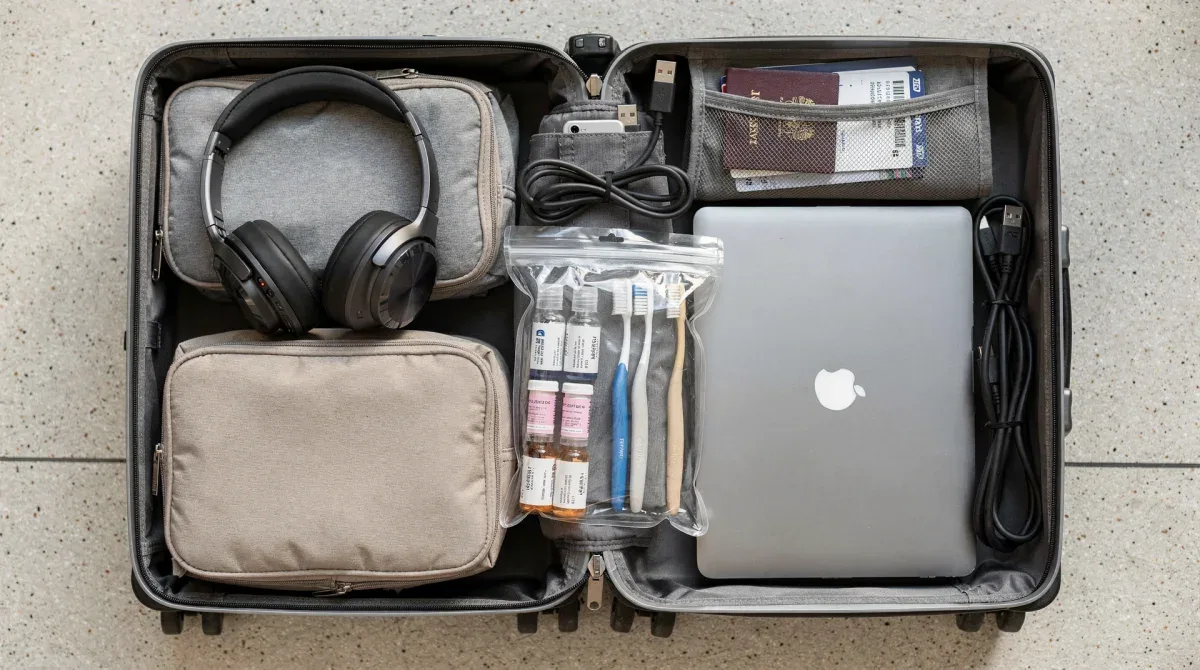
Consider the layout of your bag. Place larger electronics on top or in easily accessible compartments. Ensure your 3-1-1 liquids bag is readily removable, even if new scanners reduce the need to take it out. Think about density: avoid packing overly dense items together, as this can obscure scanner views. Spreading out your belongings can help the CT scanners get a clearer picture of your bag's contents. The goal is to make your bag as 'scanner-friendly' as possible, preventing any flags that might slow you down.
Tips for an efficient carry-on setup
- Layering for scanning: Place dense items at the bottom, lighter items on top, with electronics easily accessible.
- Clear pouches for essentials: Use transparent bags for toiletries, medications, and small electronics to aid visual inspection.
- Consolidate cables: Organize all charging cables and adapters in a single, small pouch to prevent tangles and confusion.
Remember, the less time a TSA officer spends trying to decipher your bag's contents, the faster you'll be through. Smart packing is an art and a science that, when mastered, significantly contributes to beating those long lines. It's about being considerate of the screening process and taking steps to make it as straightforward as possible for both yourself and the security personnel. This forward-thinking approach is invaluable for any traveler in 2026.
Navigating common checkpoint challenges
Even with the best preparation, unforeseen circumstances can arise at the TSA checkpoint. Understanding common challenges and how to address them quickly can prevent minor hiccups from becoming significant delays. From unexpected item flags to questions about your digital ID, being prepared for potential issues ensures you maintain your fast-track momentum. The key is to remain calm, cooperative, and informed about your rights and the procedures.
One common challenge is the 'random secondary screening.' While rare for trusted travelers, it can happen. If selected, cooperate fully and understand it's a routine safety measure. Another issue might be a malfunctioning digital ID reader; always have your physical ID ready as a backup. Questions about unusual items in your bag can also lead to delays. If you're carrying anything out of the ordinary, like specialized medical equipment or unique souvenirs, consider checking the TSA's 'What Can I Bring?' tool beforehand or declaring it to an officer.
Troubleshooting and quick resolutions
- Digital ID issues: Always have your physical ID readily available as a fallback.
- Unexpected bag search: Remain polite and cooperative; ask questions if you don't understand the reason for the search.
- Special items: Declare medical devices, large electronics, or unique items proactively to officers.
Effective communication is vital. If you have concerns or questions, politely ask a TSA officer for clarification. They are there to ensure safety and facilitate your travel. By anticipating these challenges and knowing how to respond, you can minimize their impact and ensure your journey through the checkpoint remains as smooth and swift as possible, even when unexpected events occur. Preparedness is your best defense against delays.
Looking ahead: what's next for airport security?
The evolution of airport security doesn't stop in 2026. The TSA, in collaboration with industry partners, is continuously exploring new technologies and procedures to further enhance both security and traveler experience. Anticipating these future developments can help you stay ahead of the curve, ensuring your travel remains as efficient as possible for years to come. The trend is clear: more automation, more personalization, and even greater integration of digital solutions.
One area of focus is predictive analytics, using data to identify potential risks before they even reach the checkpoint. Imagine a system that analyzes travel patterns and passenger information to flag potential issues proactively, allowing for targeted screening while most travelers pass through unimpeded. Biometric advancements are also on the horizon, with the potential for touchless identity verification becoming even more pervasive, moving beyond just digital IDs on phones to potentially facial recognition at every step of the airport journey. These innovations promise an even more seamless future for air travel.
Future innovations to watch for
- AI-powered threat detection: Algorithms that learn and adapt to identify new threats in real-time.
- Seamless biometric pathways: From check-in to boarding, identity verification without physical interaction.
- Personalized security profiles: Tailored screening based on individual traveler risk assessments and trusted traveler status.
These developments underscore a commitment to a future where airport security is not just a necessary hurdle, but an integral, almost invisible part of the travel experience. By staying informed about these emerging trends, travelers can continue to adapt their strategies, ensuring they always benefit from the latest advancements designed to make flying easier and more secure. The journey towards truly frictionless travel is ongoing, and 2026 is just another exciting milestone along the way.
| Key Strategy | Brief Description |
|---|---|
| Digital ID Fast-Track | Use secure digital identification on your smartphone for quicker identity verification at checkpoints. |
| Updated Carry-On Rules | Understand new guidelines for electronics and liquids to avoid manual bag checks and delays. |
| Trusted Traveler Programs | Leverage TSA PreCheck and CLEAR for dedicated, expedited security lanes and reduced screening requirements. |
| Smart Packing | Organize your carry-on strategically to be 'scanner-friendly' and prevent additional inspections. |
Frequently asked questions about 2026 TSA travel
What are the biggest changes for carry-on items in 2026?▼The most significant change is the reduced need to remove electronics like laptops and tablets from bags, thanks to advanced CT scanners. While the 3-1-1 liquid rule remains, improved screening technology aims to minimize manual checks, making smart, organized packing more crucial than ever for efficiency.
How does the digital ID fast-track procedure work?▼Travelers can enroll their state ID or driver's license into a secure digital wallet app. At the checkpoint, this digital ID is scanned, providing instant identity verification without needing to present a physical card. It significantly speeds up the initial ID check, especially when combined with trusted traveler programs.
Is TSA PreCheck still relevant with digital IDs and new rules?▼Absolutely. TSA PreCheck remains highly relevant, offering expedited physical screening where you keep shoes, belts, and light jackets on, and liquids/laptops in your bag. Combining PreCheck with a digital ID provides the fastest possible passage through security, leveraging both identity and physical screening efficiencies.
What should I do if my digital ID fails to scan at the checkpoint?▼If your digital ID fails, always have your physical government-issued ID readily available as a backup. Technology can sometimes encounter glitches, so being prepared with your traditional identification will prevent any significant delays and ensure a smooth continuation of your security process.
Are there any new restrictions on power banks or batteries in carry-ons?▼While the general rule for lithium-ion batteries in carry-ons persists, 2026 sees clearer guidelines on maximum watt-hour ratings and proper storage. Always pack power banks in your carry-on, never checked luggage, and ensure they are within approved size limits to avoid any issues during screening.
Conclusion
The landscape of airport security in 2026 offers unprecedented opportunities for travelers to significantly reduce their time spent in lines. By embracing updated carry-on rules, leveraging digital ID fast-track procedures, and maximizing trusted traveler programs like TSA PreCheck and CLEAR, the once-daunting security checkpoint can transform into a seamless part of your journey. Preparedness, technological adoption, and smart packing are your allies in achieving a stress-free and efficient travel experience. The future of air travel is here, and it's faster and more secure than ever before.
